

Opposition warns EU aid could ‘green light’ election manipulation in Armenia
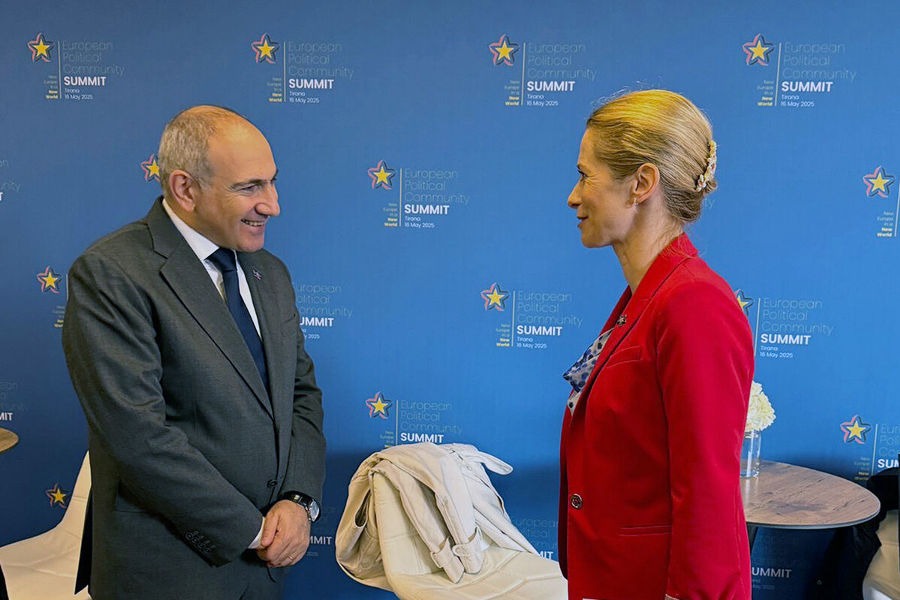
YEREVAN — European Union (EU) foreign ministers discussed Armenia during a Dec. 15 meeting of the EU Foreign Affairs Council, focusing on supporting the country ahead of next year’s elections. EU High Representative for Foreign Affairs and Security Policy and European Commission Vice President Kaja Kallas told journalists that Armenia requested EU assistance to help prevent external interference in the electoral process.
Kallas explained that the issue was addressed within the broader context of disinformation, noting that EU officials have previously identified Russia as intensifying disinformation activities ahead of Armenia’s 2026 parliamentary elections.
Following the meeting in Brussels, Armenian Foreign Minister Ararat Mirzoyan welcomed the depth of discussions with EU member states, highlighting recent progress in Armenia–EU relations. He referenced the Armenia–EU Partnership Council held two weeks earlier, during which a Strategic Partnership Agenda was adopted, elevating bilateral relations.
Mirzoyan said talks covered key areas of cooperation, including economic engagement, resilience and security — particularly against hybrid threats — as well as EU support under the European Peace Facility. He also cited progress in the visa liberalization dialogue as a priority for Armenian citizens and a significant step toward closer ties with the EU. Regional developments, including the opening of communications in the South Caucasus and potential EU involvement in infrastructure projects, were also discussed.
Armenian officials have defended cooperation with the EU on election-related resilience. Economy Minister Gevorg Papoyan stated that it is normal for a democracy to protect itself from interference. Addressing concerns that external support could itself constitute interference, Papoyan argued that safeguarding sovereignty and democratic institutions requires appropriate expertise, methods, funding and tools. He stressed that Armenia’s objective is to ensure that its sovereignty and democratic process are not undermined by any external actor.
The EU’s stated readiness to assist Armenia has, however, drawn criticism from opposition figures. Ishkhan Saghatelyan, a member of the Armenian Revolutionary Federation’s Supreme Council of Armenia and a parliamentarian from the “Armenia” Alliance, described Kallas’s remarks as direct and unambiguous intervention in Armenia’s internal affairs.
Saghatelyan said that the EU’s actions have political objectives, including preparing a pretext to restrict, pressure or neutralize opposition forces and influencing the electoral preferences of Armenian citizens. He called EU involvement direct interference at the most sensitive stage of the election cycle, undermining citizens’ rights to independently determine their government. He warned such statements could provide a “green light” for abuses, violence and political persecution. He called on all opposition parties to publicly oppose these interventions to safeguard Armenia’s sovereignty.
Saghatelyan further noted that the current authorities’ request for EU support — drawing on examples such as Moldova — demonstrates both a reliance on external actors and an acknowledgment that the ruling party lacks sufficient domestic support and administrative resources to maintain power independently.
He warned that, if unchecked, this dynamic could compromise the democratic process and the principle that the Armenian people alone determine their leadership.
Additional criticism came from Armenian Republican Party Vice Chairman Armen Ashotyan, who accused both the government and EU institutions of failing to emphasize the need for elections to be “free, fair and democratic.” In a public statement, Ashotyan argued that discussions with EU representatives focused on hybrid threats, disinformation and cybersecurity, while neglecting core democratic principles. He claimed that European institutions prioritize political continuity over democratic standards in Armenia, a charge rejected by the government but indicative of growing domestic polarization.
Political analyst Ara Poghosyan also warned that the free expression of Armenian citizens could be constrained due to political labeling and widespread repression, amplified under the guise of European Union support.
Speaking to Sputnik Armenia, Poghosyan described EU assistance as part of a broader effort to counter foreign informational interference while effectively securing Armenia on a trajectory favorable to Western interests. EU High Representative for Foreign Affairs Kaja Kallas recently confirmed that Armenia requested support similar to that provided to Moldova to mitigate harmful external influence. Earlier, EU Commissioner for Enlargement Marta Kos indicated that the aid package would total €12 million, aimed at bolstering Armenian institutions’ capacity to counter hybrid threats, strengthen cybersecurity and mitigate information manipulation.
“This is, in essence, a localized continuation of the West–Russia hybrid conflict,” Poghosyan said.
“As in Moldova, the effort seeks to prevent the country from deviating from a path deemed favorable by the EU. The current Armenian regime is convenient for the EU: having lost some internal legitimacy, it relies heavily on external validation.”
Poghosyan warned that this external support is likely to affect Armenia’s domestic politics, particularly during the 2026 elections. “We already see a pattern emerging: opposition figures could be isolated through political labeling, characterized as ‘hybrid instruments’ allegedly acting against Armenia.
Repression will be legitimized via EU support, ensuring outcomes favorable both to domestic authorities and Western partners,” he said.
The analyst highlighted that Armenia’s authorities are increasingly dependent on Western approval, alongside emerging ties with Turkey and Azerbaijan, framing EU intervention as a clear influence on internal affairs. “By citing hybrid threats and referencing Moldova, EU officials implicitly indicate how the same model could be applied here,” Poghosyan noted.
“From the Western perspective, this is a ‘war’ for influence and anti-Russian policy, with values applied selectively: in some cases, democracy is protected; in others, it is subordinated to strategic objectives. In practice, this constitutes interference and a direct challenge to Armenia’s sovereignty, as it undermines the state’s ability to independently organize elections and allow citizens to freely express their will,” he added.
Under the current framework of EU ‘assistance,’ Poghosyan concluded that the electoral rights of Armenian citizens will face restrictions due to political labeling and the anticipated wave of repression.

